
He Could Barely Move Beside the Road. Seventeen Days Later, He Took His First Step
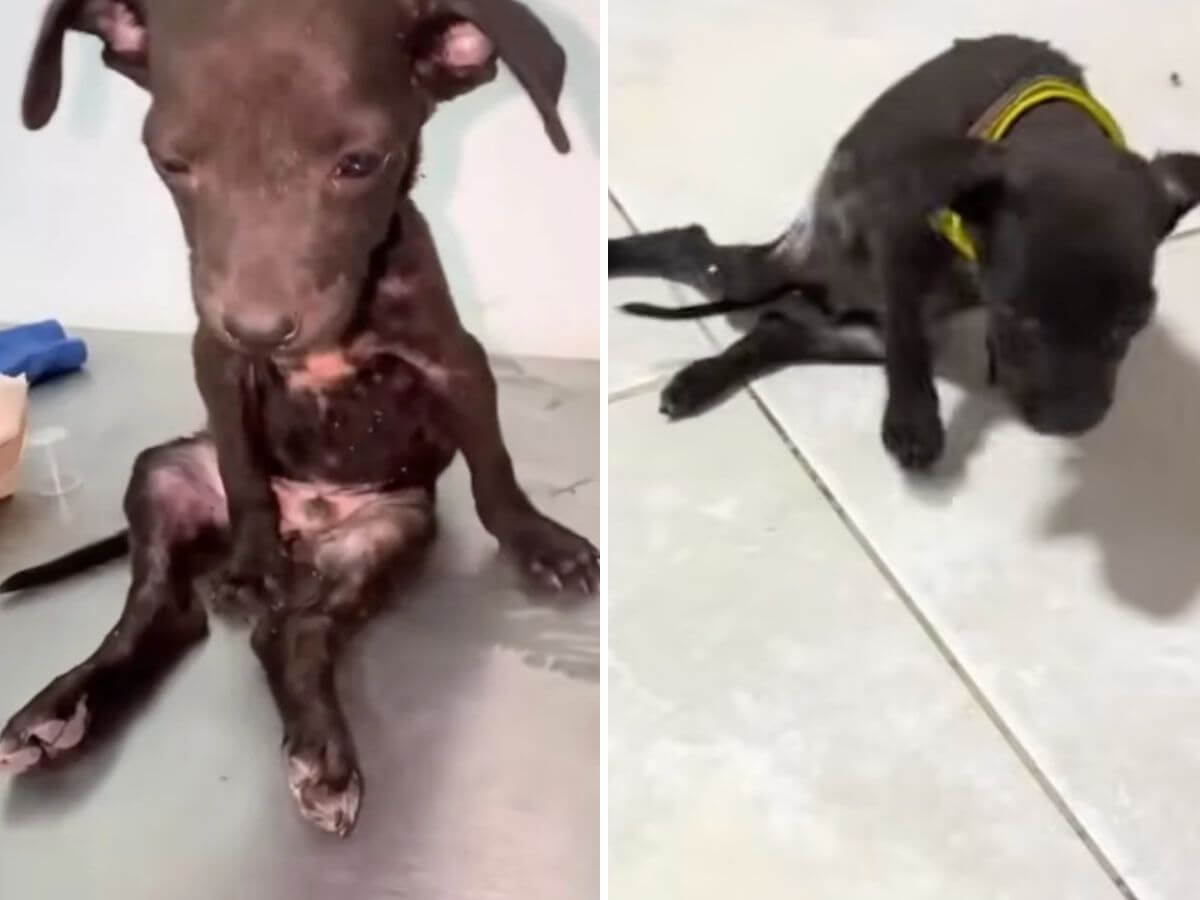
He stayed in a quiet corner beside the road, weak, hungry and struggling to move.
When rescuers approached, he did not resist. They took him for urgent veterinary care, beginning a recovery that would depend on daily treatment and patient attention.
Seventeen days later, he stood and took a small step. It was the moment his caregivers had been waiting for, with more changes still to come.
Someone Stopped to Help
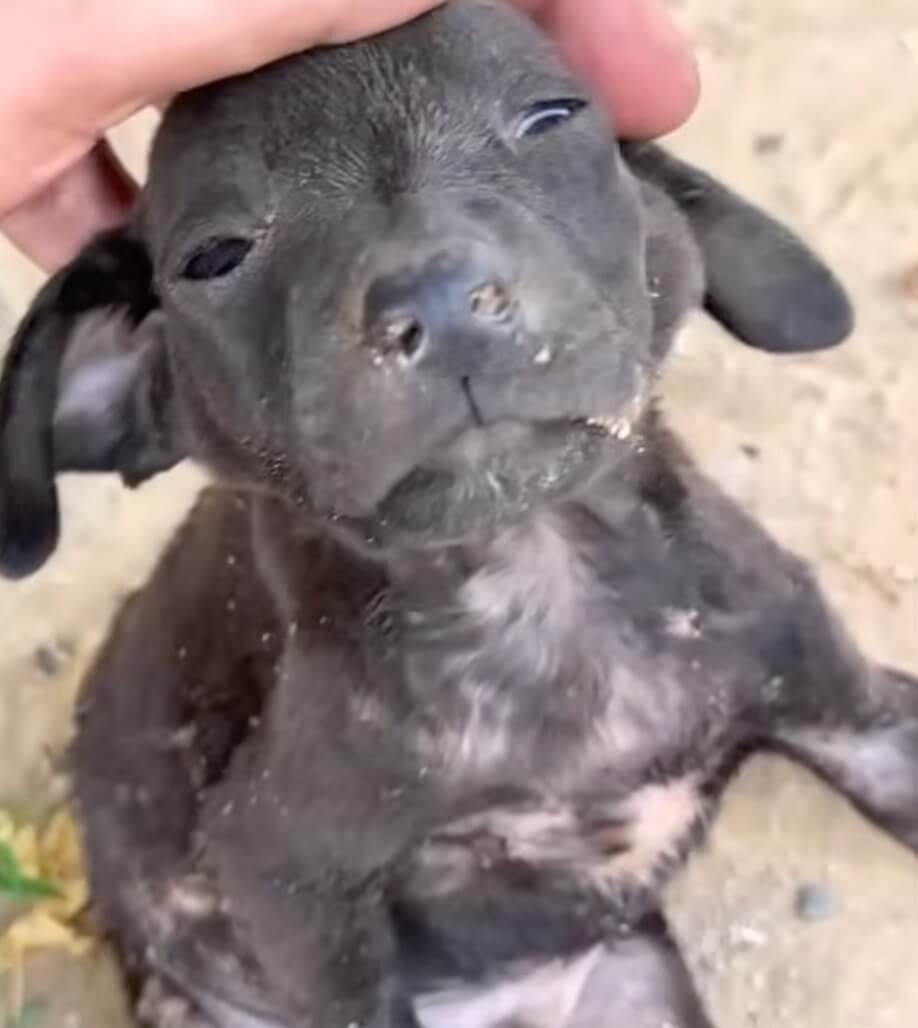
The rescue story shared by Pray4Dogs describes a dog found lingering in the same roadside spot, exhausted and having difficulty moving.
His history was unclear. The account describes him as abandoned, but it does not establish how he came to be there or what caused his apparent injury.
What the rescuers could see was enough to act. They approached gently and brought him to a veterinarian.
For anyone finding a dog in similar distress, getting advice about handling and transport can help protect an already injured animal.
PDSA advises, “Contact your vet immediately if your dog is in severe pain, is unable to put a leg down or has a serious wound.”
Call the veterinary team and explain what you can see. Ask how to move the dog safely rather than encouraging him to walk to test what he can manage.
For this dog, reaching the clinic meant someone could begin assessing the problems behind his weakness.
His Care Couldn’t End With a Meal
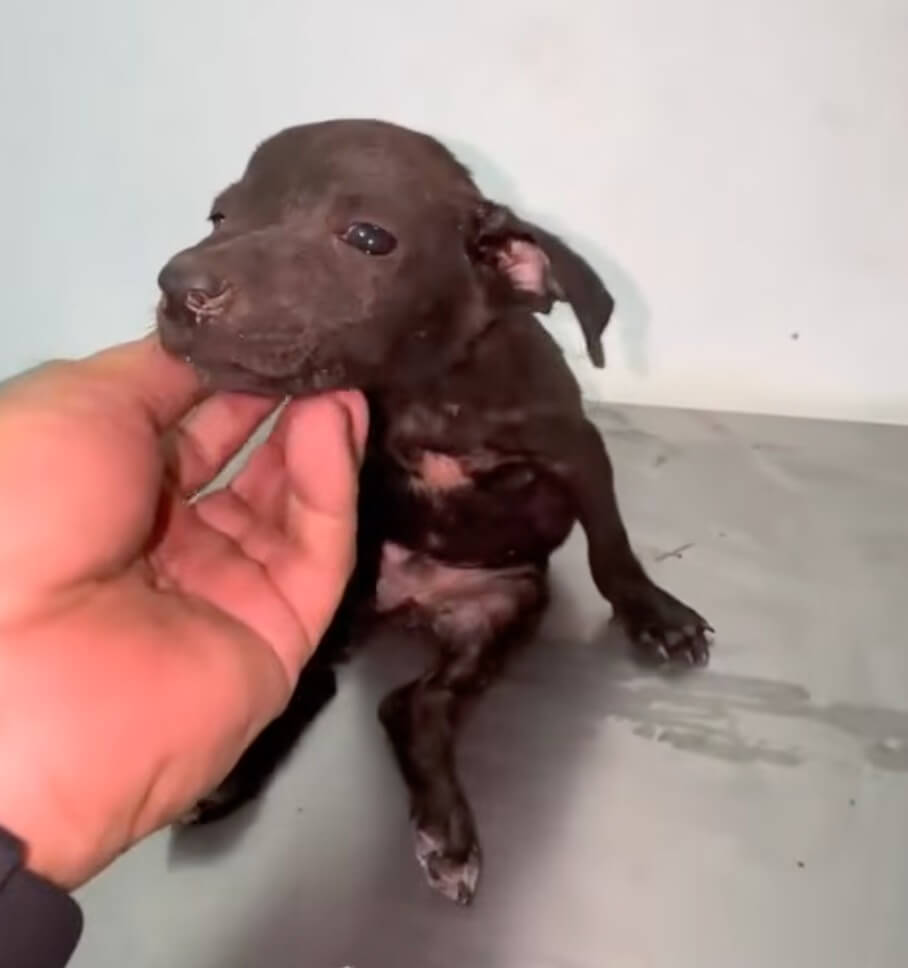
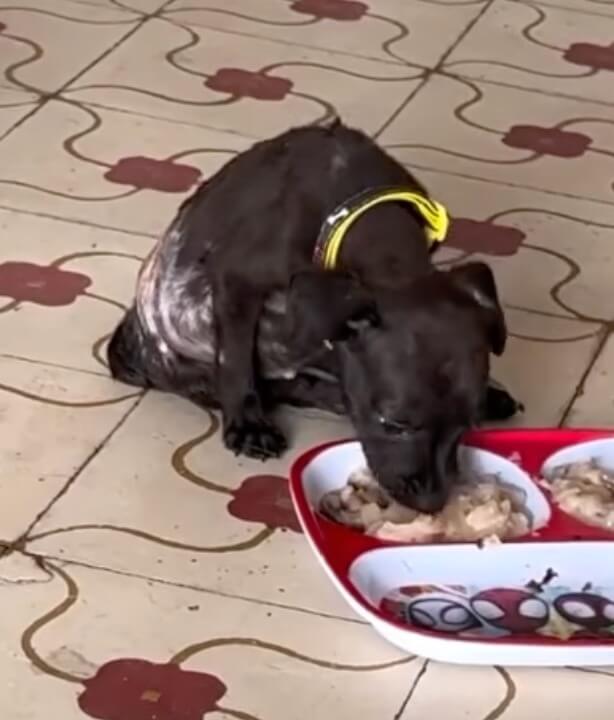
The rescue update reported severe anemia, an infection and a heavy flea infestation.
He received food, medication and continuing care. During the early days, even moving remained difficult.
His caregivers watched for changes while treatment continued. A meal could address his hunger, but his condition needed more than feeding alone.
Explaining anemia, VCA Animal Hospitals notes, “It is not a specific disease, but rather the result of some other disease process or condition.”
If your pet is diagnosed with anemia, ask your veterinarian what may be causing it and which tests or treatments are needed. A feeding plan may support recovery while other medical needs are addressed.
For the dog from the roadside, those first days brought no sudden return to normal activity.
There were meals, medication and people watching his comfort and movement. They continued caring for him while waiting for signs that he was getting stronger.
On Day 17, He Stood
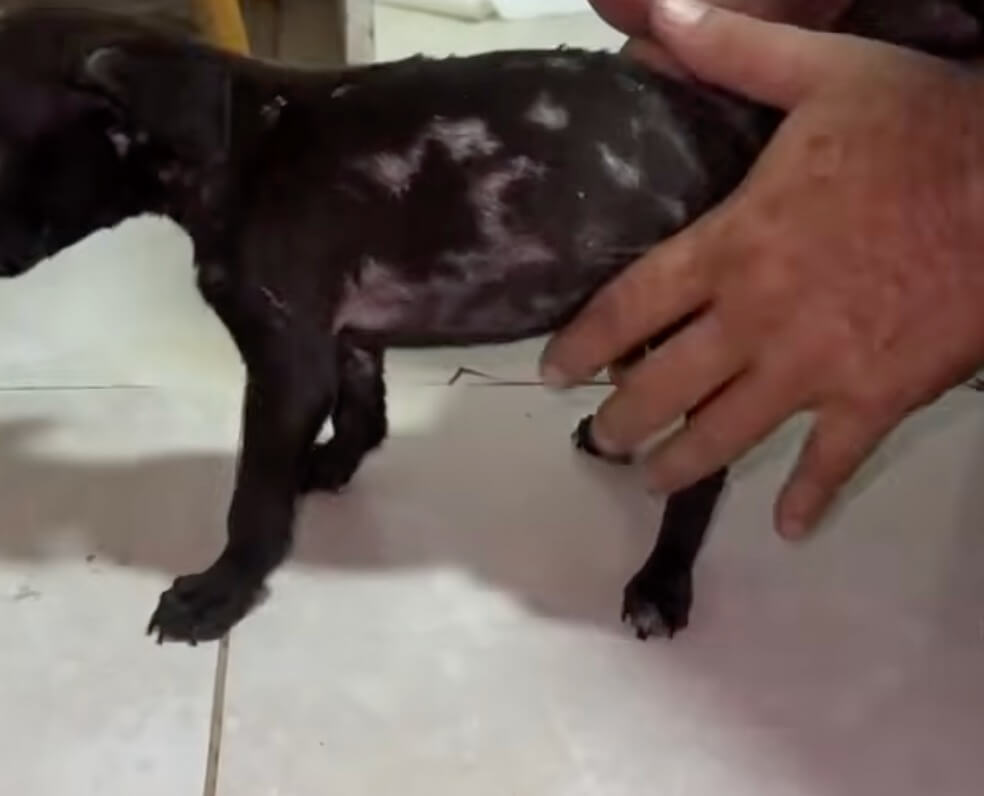
More than two weeks after the rescue, the account recorded a change.
Then came a small step. Another followed.
Until then, moving had been a struggle. Now, his caregivers could watch him stand and begin making his way forward.
The account describes them encouraging small movements during his recovery. For another injured dog, that kind of activity should follow veterinary instructions suited to the animal’s condition.
There is no need to measure a recovering pet against someone else’s timeline. Ask the treating veterinarian what progress to watch for and when activity can safely increase.
This dog’s first steps belonged to his own recovery. Soon, they were followed by moments that showed more of his personality.
There Was Room for Play Again
As his strength returned, he began taking an interest in toys and seeking company.
The updates describe him finding ways to play, then making games of his own. People who had first met him when he could barely move were getting to know a more active, playful dog.
Progress remained uneven. His caregivers continued noticing the smaller improvements alongside the larger ones.
A little more movement. An interest in a toy. Time spent enjoying someone’s company.
Those moments gave them more to look forward to as his care continued.
Eventually, the account brought news of a home.
A Family Welcomed Him
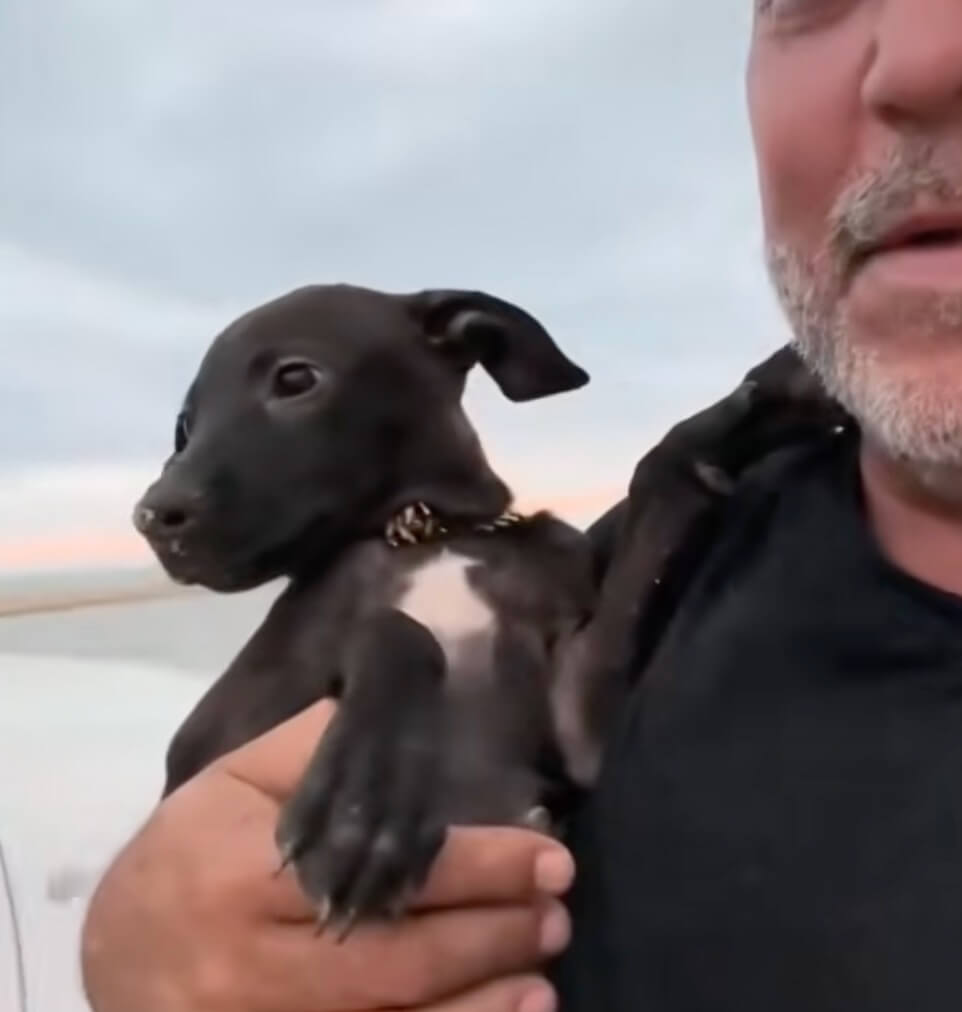
After the roadside rescue and the slow early days of treatment, he had people ready to include him in their lives.
For people adopting a dog after a difficult period, coming home can still require adjustment. Familiar caregivers and routines may be replaced by new voices, rooms and expectations.
In its settling-in guidance, Dogs Trust recommends, “Create a routine and stick to it.”
Keep daily care predictable where possible. Follow the rescue’s advice about ongoing medical needs and allow time for your dog to become comfortable.
The later updates describe this dog playing, showing a mischievous side and running toward the people caring for him.
His days had moved beyond the corner where he was found.
He Had People to Run Toward

At the beginning of the account, he was weak and struggling beside the road.
Rescuers brought him into care. Treatment and daily attention carried him through the slow days before he could stand.
By the end, he was active and living with a family.
His first step came 17 days after he was found. Later, he could run toward people who were happy to see him coming.
If his story touched you, consider sharing it to acknowledge the rescuers, veterinary teams and adopters who keep caring through the slow days, too.
Also read:
Chiwi Could Barely Move Among the Garbage. Someone Stopped and Gave Her a Chance


