
Rudy Could Barely Stand. His Rescuers Helped Him Become a Puppy Again
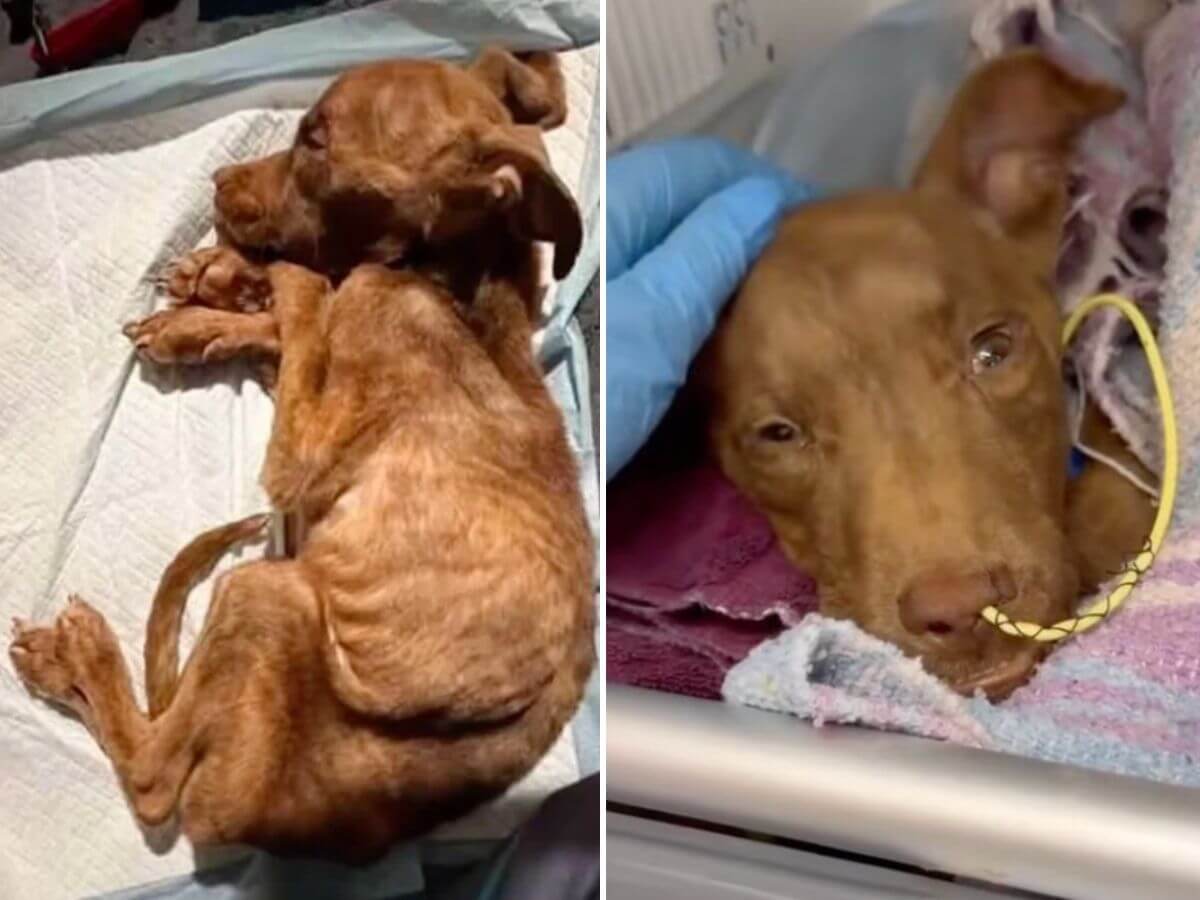
By the 35th day of his recovery, Rudy was wearing dinosaur pajamas. His ears looked wonderfully goofy, his eyes were brighter, and he was beginning to act like a puppy with things to say and places to go.
When ThisIsHouston first stepped in to help him, he couldn’t hold himself up. Estimated to be younger than 6 months, Rudy needed emergency veterinary care before he could begin getting stronger.
His recovery came in small pieces. He started eating, took an interest in dogs passing his kennel and eventually managed a couple of steps on his own.
Those changes help explain why the puppy in pajamas meant so much to the people caring for him. They had watched him struggle to stand. Now they were getting to know his playful side.
A Tiny Puppy Needed Help Quickly
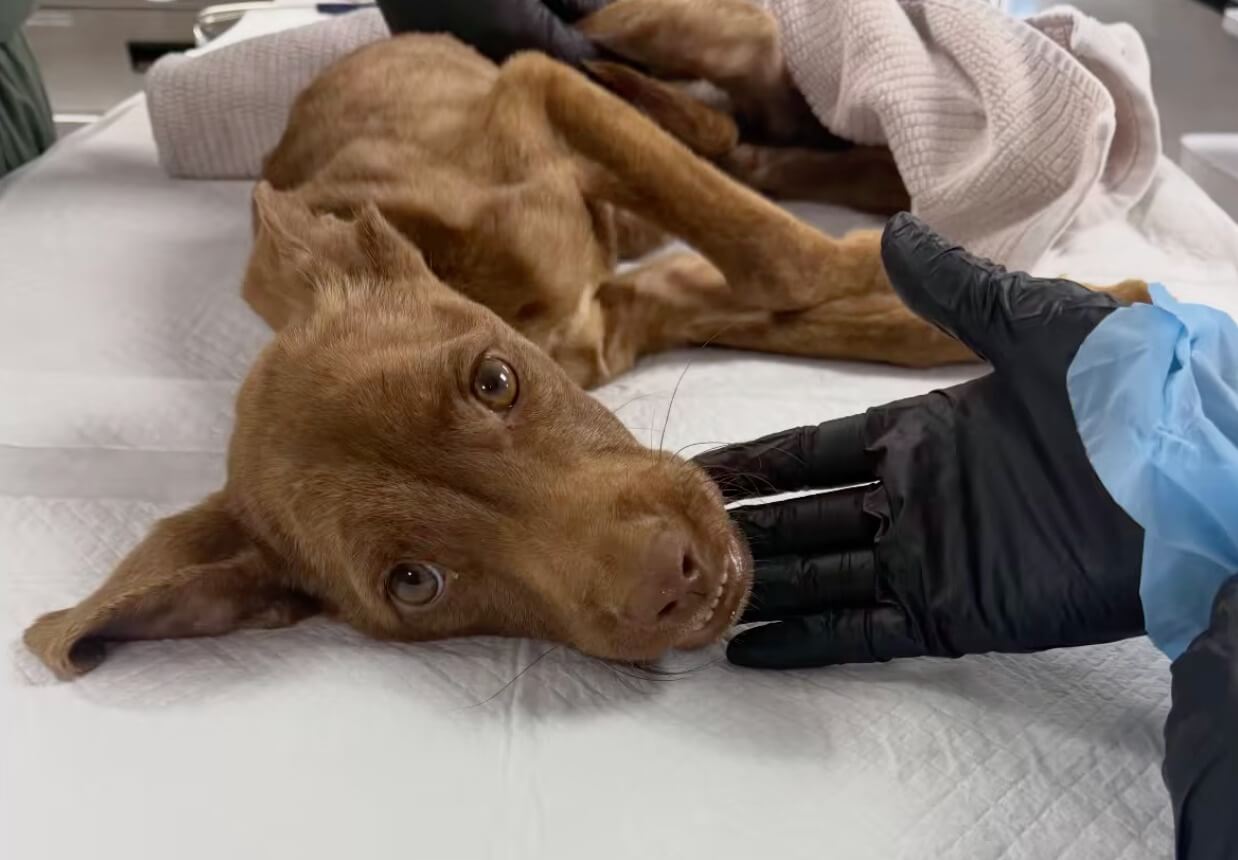
Rudy was estimated to be younger than 6 months when ThisIsHouston learned about him through a social media post. The rescue stepped in and arranged emergency veterinary care.
His story was shared in the rescue’s CUDDLY campaign and retold in a video uploaded to the NoAnimalBehind YouTube channel. The video account describes a puppy who was severely underweight, dangerously cold and barely responsive.
His temperature had fallen to 90 degrees Fahrenheit. His gums were pale, and he needed help quickly.
The American Animal Hospital Association gives clear advice in its guidance about hypothermia. “Consult your veterinarian as soon as possible to get further guidance and prevent complications.”
If you find a dog who is dangerously cold and weak, contact a veterinarian promptly. Rudy’s rescuers arranged the emergency care he needed.
At the hospital, his team had several problems to address. According to the video account, his blood pressure and blood sugar were dangerously low, and severe anemia meant he needed a blood transfusion.
He also needed help getting nutrition. A feeding tube supported him when he could not eat on his own.
His days were filled with treatment and monitoring while his caregivers waited to see how he would respond.
His Caregivers Watched for Small Signs of Improvement
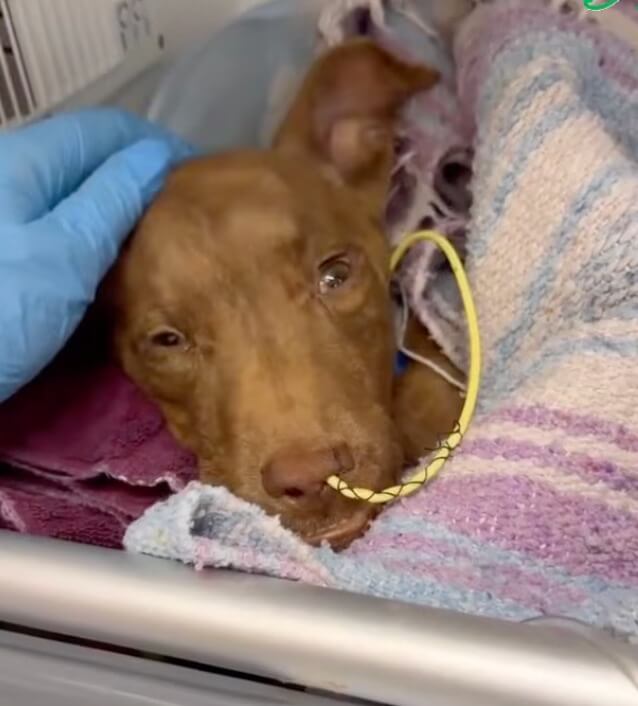
An initial negative parvovirus test was encouraging, but Rudy remained seriously ill.
He developed facial twitching and head bobbing. He could not stand, and his white blood cell count was very low.
Veterinarians investigated possible causes and tested him for distemper. His caregivers continued watching for changes while treatment went on.
Describing those early days, the video’s account of the rescue explains, “During those terrifying days, Rudy seemed to disappear beneath his illness.”
For anyone following his care, the waiting was part of the story. There was no single reassuring result that could answer every concern about him.
His distemper test eventually came back negative. Over time, his temperature and blood sugar became more stable, and his bloodwork began improving.
Rudy still needed care, but there were now improvements his team could build on.
Healing Meant Caring for More Than His Illness
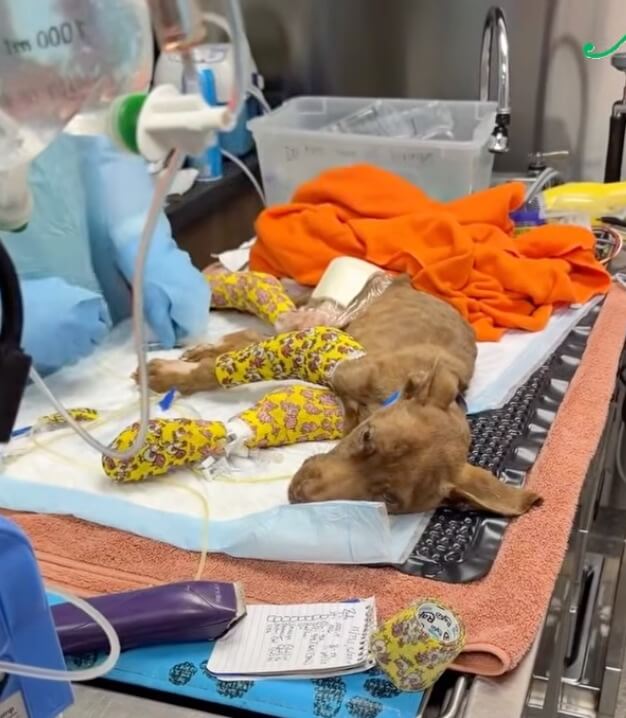
Being unable to move normally had brought further problems. Rudy developed pressure wounds that needed treatment, and an injury to his tail added to his care needs.
His team also faced the possibility of surgery. Getting him stronger meant continuing to support his body while giving those injuries time and attention.
In its guidance for paralyzed pets, VCA Animal Hospitals explains why resting surfaces matter when movement is limited. “Your pet will need soft, thick bedding to reduce the risk of pressure sores from laying in one position for too long.”
Rudy’s account describes severe weakness rather than a confirmed diagnosis of paralysis. Still, his pressure wounds show why the needs of a dog who cannot get up easily go beyond having food and a place to sleep.
If you are caring for a dog with limited movement, ask the veterinary team how to arrange bedding and help with position changes. Those instructions should reflect that dog’s condition and injuries.
For Rudy, nutrition, wound care and rehabilitation became parts of the same ongoing effort. As that care continued, he began paying more attention to what was happening around him.
A Little Bark, Then a Couple of Steps
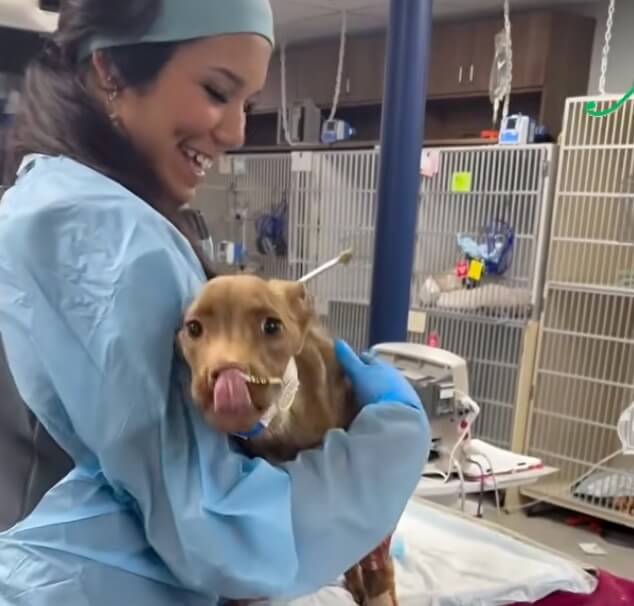
Rudy became more alert. He started barking at dogs passing his kennel.
For a puppy who had been barely responsive, finding the energy to make himself heard was a welcome change.
The video account describes what those moments meant to his caregivers. “Then, occasionally, his little personality appeared. We held onto every tiny sign of life.”
More progress followed during rehabilitation. Rudy began supporting himself, then managed a couple of small steps.
They were short movements, but they marked a change from needing help to hold his body up. He was beginning to move under his own strength.
PetMD explains why this kind of care is planned around the individual animal. “If your dog needs physical therapy, their therapeutic plan will be created to meet your pet’s individual needs.”
For someone helping a dog recover, the useful question is what that dog is ready to do. Ask the treating team which exercises are appropriate and how to carry them out before trying them at home.
Rudy’s exercises were one part of a recovery that also depended on continued treatment and nutrition. As he ate well and gained weight, there was more strength behind his efforts.
By Day 35, There Was Room for Play
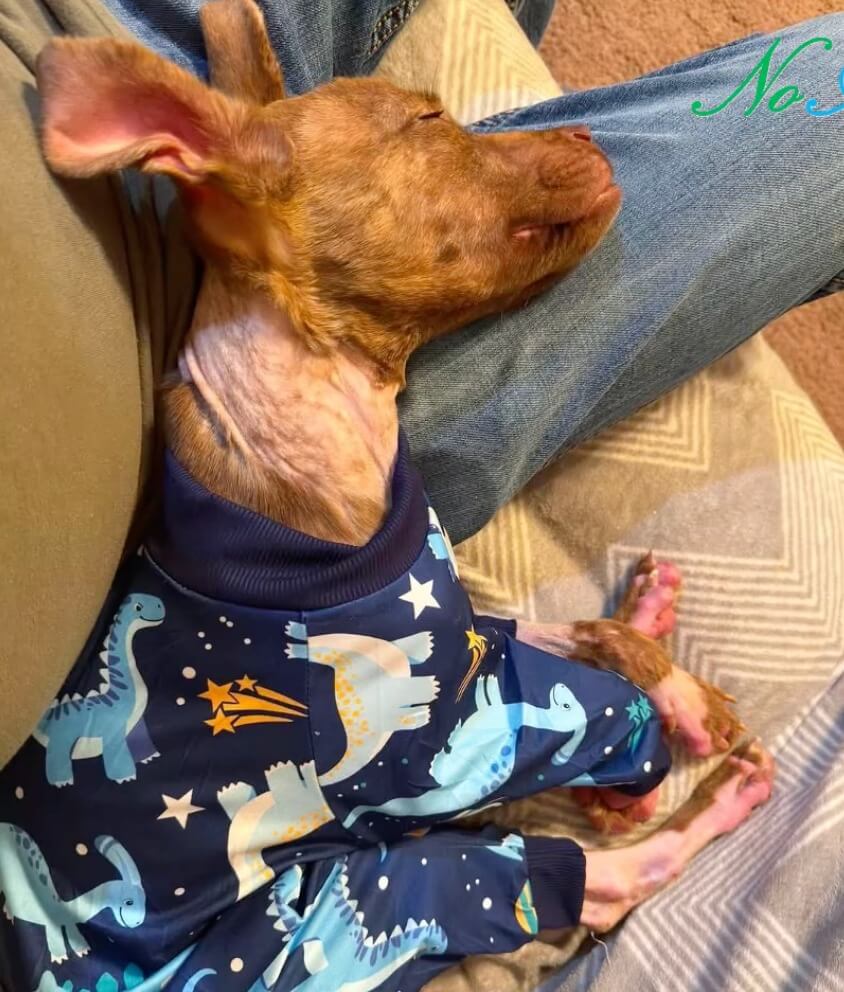
Eventually, Rudy no longer needed IV fluids. His wounds improved with care, and his body began filling out.
By the video’s day-35 point, his brighter expression and playful behavior showed how far he had come. The dinosaur pajamas made for a sweet picture, but the change went much deeper than clothing.
This was a puppy who had needed help with nearly everything. Now he had the energy to interact with the world around him.
His care had given him room to grow stronger, and his personality was becoming easier to see.
Rudy Was Ready for the Next Part of His Life
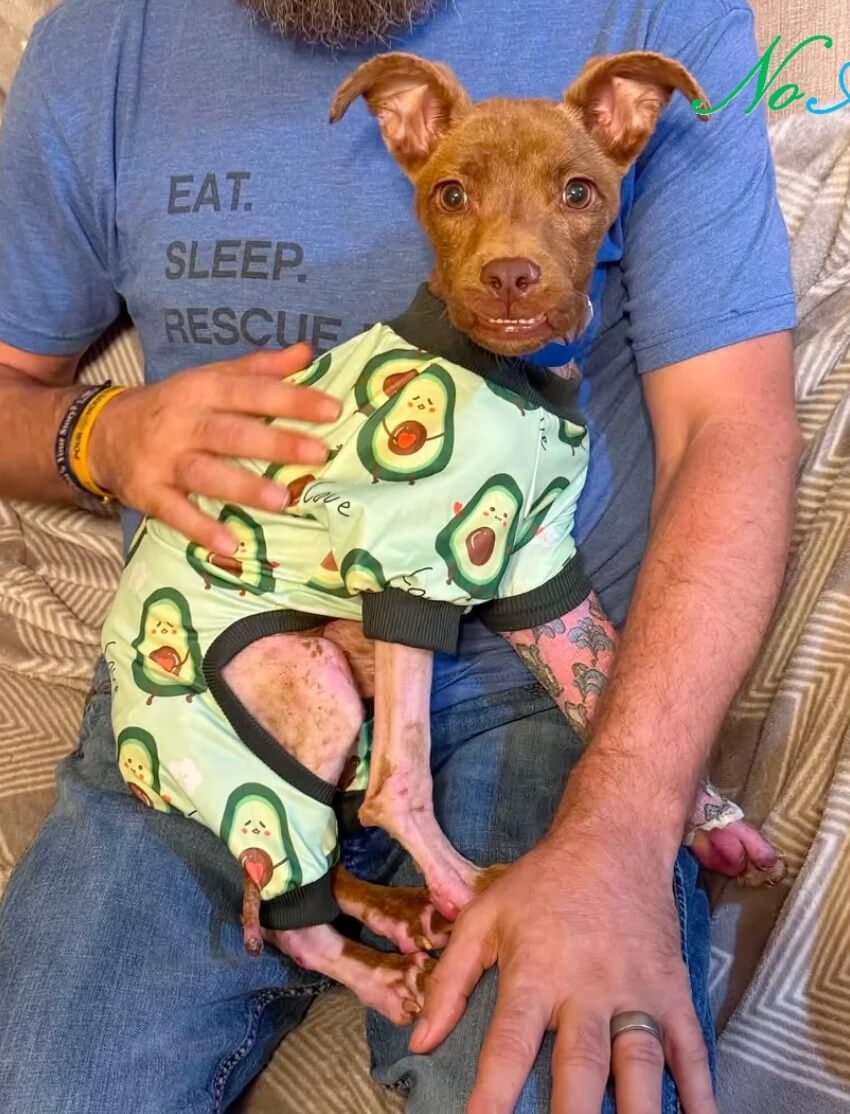
ThisIsHouston took responsibility for Rudy’s rescue, while his veterinary caregivers handled the treatment and monitoring he needed. His rescue-linked Waggle campaign identifies his emergency hospital as VERGI 24/7.
An Oct. 8, 2026, campaign update announced that Rudy was ready for adoption. It also described a stronger puppy whose personality was becoming more apparent.
By then, the rescue could begin looking for a family for him. Readers interested in his current availability can contact the rescue through its adoption page.
Rudy had gone from being unable to stand to having a chance at life with a family. Along the way, a bark, a meal and a few steps had each given his caregivers something to welcome.
The puppy in dinosaur pajamas had needed time to reach that moment. People made sure he received the care to get there.
If Rudy’s story touched you, consider sharing it.
Also read:
Henry Was Too Weak to Walk to Safety. So His Rescuer Carried Him


