
Everyone Thought This Tiny Puppy Would Never Walk. Sixty Days Later, She Ran
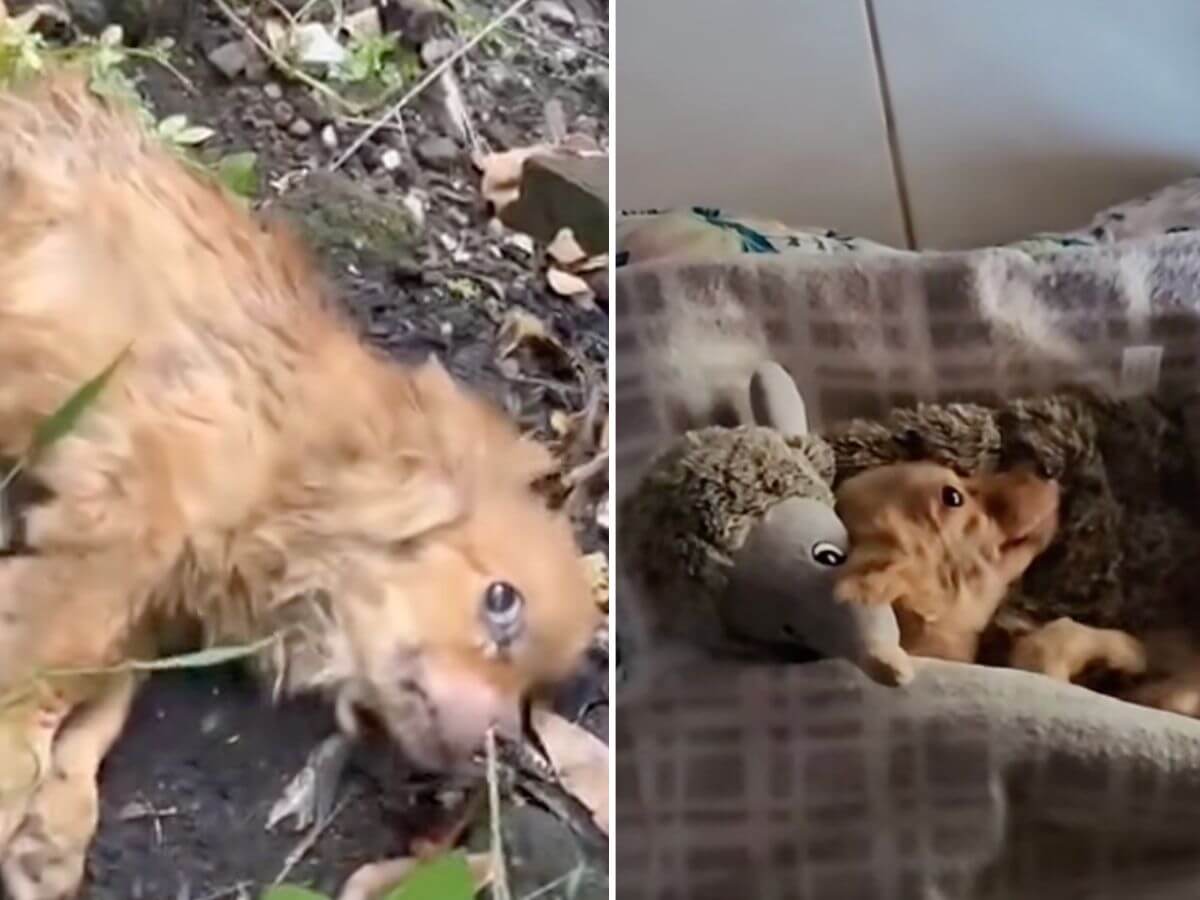
Sixty days.
That’s all it took for a puppy many people believed was dying to do something no one thought possible.
When rescuers first met Selena, she was only about six months old. Her tiny body was twisted by severe deformities. She couldn’t stand. She couldn’t walk. She could barely move at all.
Lying quietly at a small rescue station, she looked more like a puppy waiting for the end than one with a future ahead of her.
To anyone seeing her for the first time, the outcome seemed inevitable.
Even experienced rescuers struggled to imagine her getting better.
But Selena had a habit of surprising people.
What began as a desperate attempt to keep a fragile puppy alive slowly turned into one of the most remarkable recoveries the rescue team had ever witnessed. Day by day, she fought through breathing problems, severe weakness, and a long list of medical challenges that would have overwhelmed most animals.
Then, just two months after arriving unable to stand on her own, Selena did something nobody expected.
She ran.
It’s a story about medical care, patience, and a rescue team that chose to fight for a puppy even when the odds seemed stacked against her.
Rescuers Thought She Had Been Hit by a Car
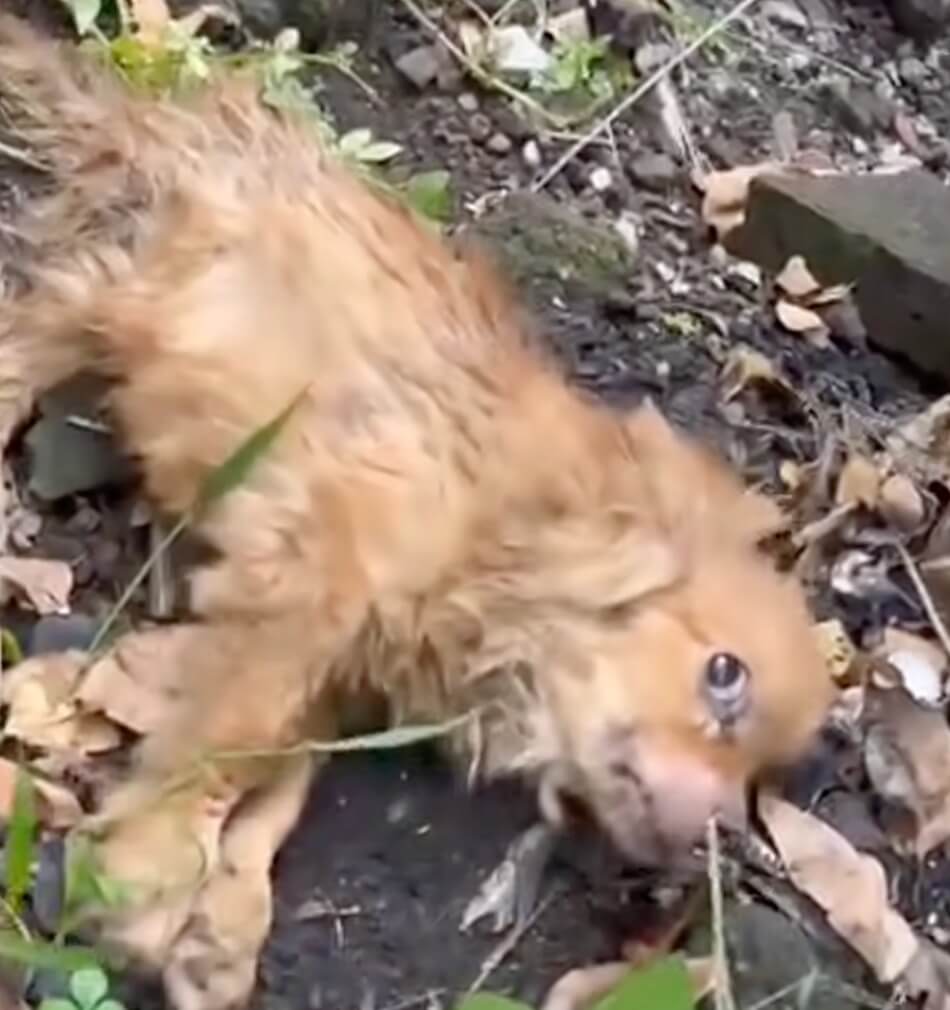
The first thing people noticed was Selena’s spine.
It was twisted so dramatically that many assumed she had been the victim of a serious accident.
She was painfully thin. Her eyes protruded unnaturally. She coughed constantly and struggled to breathe. Even resting appeared exhausting.
After arriving at the rescue station, Selena spent most of her time lying quietly on a blanket. She rarely moved. Every breath appeared to require effort.
The condition she was in left a lasting impression on everyone involved.
According to the rescue team, one caregiver later admitted, “I scooped Selena up & honestly thought she wasn’t going to make it.”
It wasn’t difficult to understand why.
At the time, Selena’s body seemed to be losing a battle from every direction.
Still, there was something in her eyes that kept people from giving up.
A friend who practiced veterinary acupuncture learned about Selena’s condition and couldn’t ignore it. Even knowing the puppy might never walk, she urged the rescue team to give her a chance.
If there was even the smallest possibility of saving her, it was worth trying.
The team agreed.
The Test Results Revealed a Different Truth
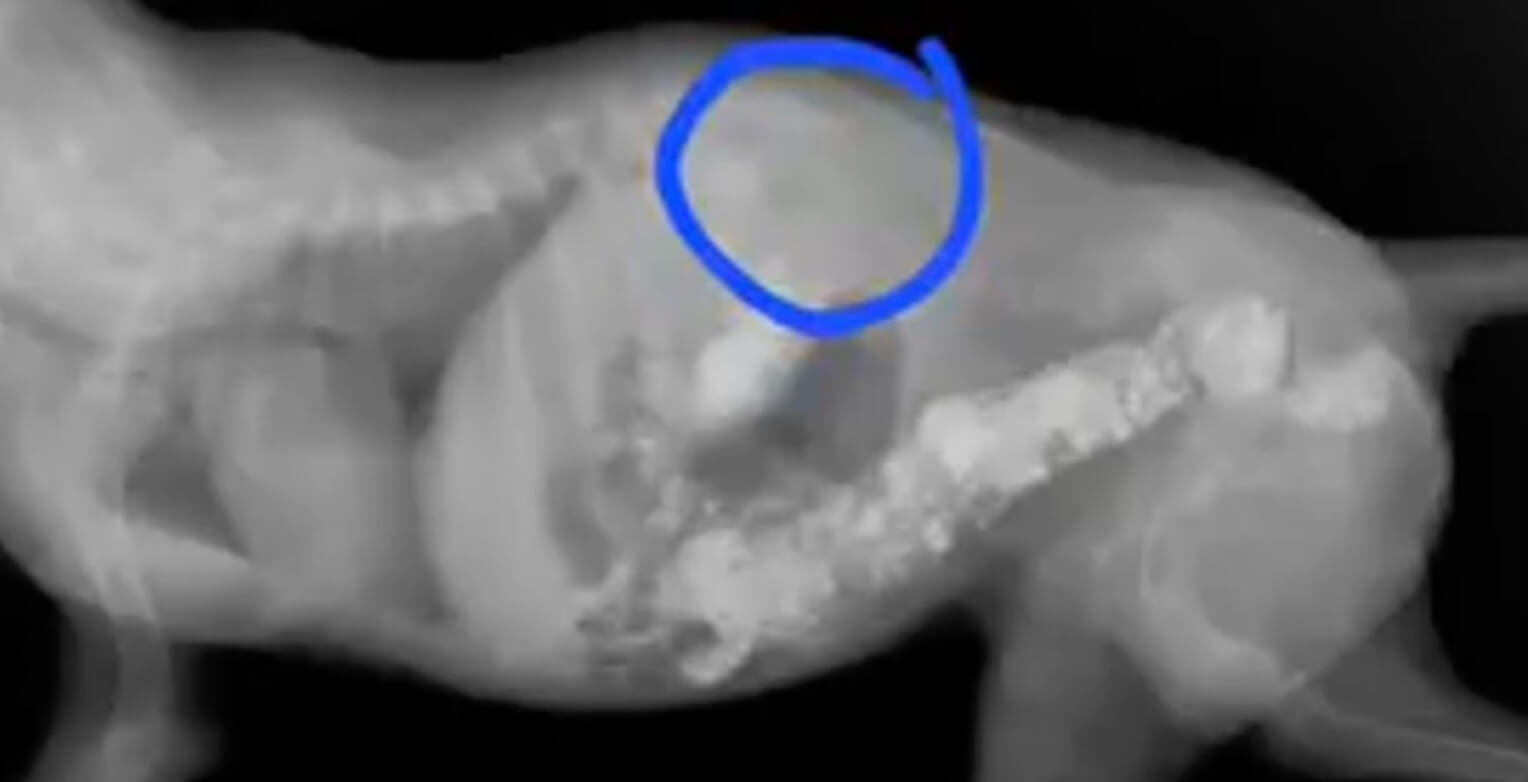
As veterinarians began running tests and taking X-rays, they discovered something surprising.
Selena hadn’t been hit by a car at all.
Instead, she had been born with severe deformities affecting three separate areas of her spine. Long-term malnutrition had made her condition even worse and left her unusually small for her age, raising concerns about congenital dwarfism.
As difficult as those findings were, veterinarians soon realized Selena’s challenges extended far beyond her spine.
Her enlarged heart was putting pressure on her lungs, helping explain why every breath seemed like such a struggle. Her liver and kidneys were beginning to fail as well.
Her breathing difficulties were especially concerning. According to PetMD, “Symptoms for DCM include: Rapid breathing.”
While Selena’s condition was far more complex than a single diagnosis, her respiratory distress reflected just how serious her situation had become.
Cases like Selena’s are a reminder that serious health problems rarely affect only one part of the body. When multiple organs begin struggling at the same time, even routine recovery becomes significantly more challenging.
By every measure, Selena faced overwhelming odds.
Yet somehow, she kept holding on.
A Treatment Plan Built Around Hope
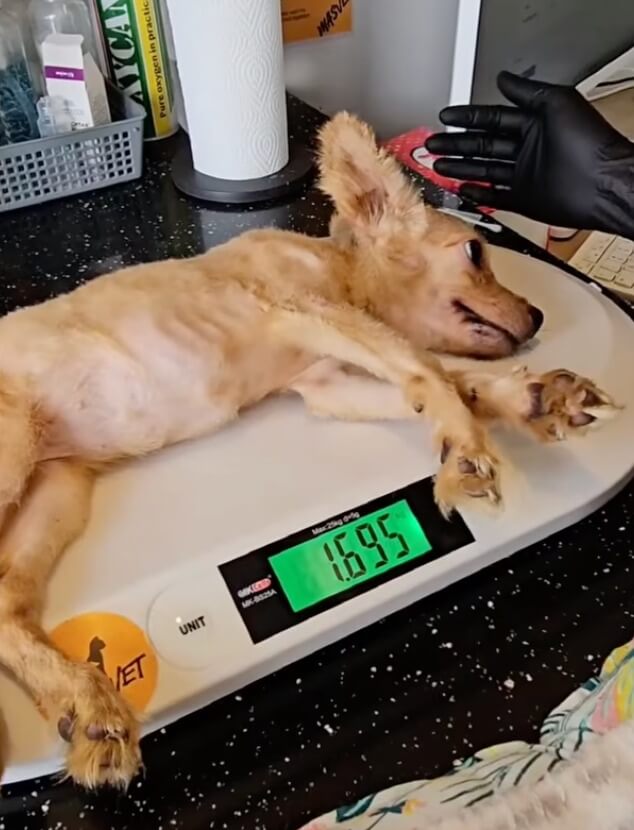
The rescue team moved quickly.
Selena was started on antibiotics, respiratory treatments, pain management, liver and kidney support, and a carefully structured nutritional program designed to help her fragile body recover.
Because she had been malnourished for such a long time, nutrition had to be introduced carefully.
For severely underweight dogs, feeding too much food too quickly can create additional complications. According to the ASPCA, “Dogs on a re-feeding diet are initially fed small amounts of food that are slowly increased over about two weeks.”
That patient approach became an important part of Selena’s recovery.
The first days were difficult.
She spent most of her time lying still, breathing in shallow gasps while caregivers monitored her closely. There were moments when simply getting through the day felt like an accomplishment.
There were no dramatic breakthroughs.
No overnight miracles.
Just a rescue team showing up every morning and doing everything they could to give a tiny puppy another chance at life.
The First Signs Selena Wasn’t Giving Up
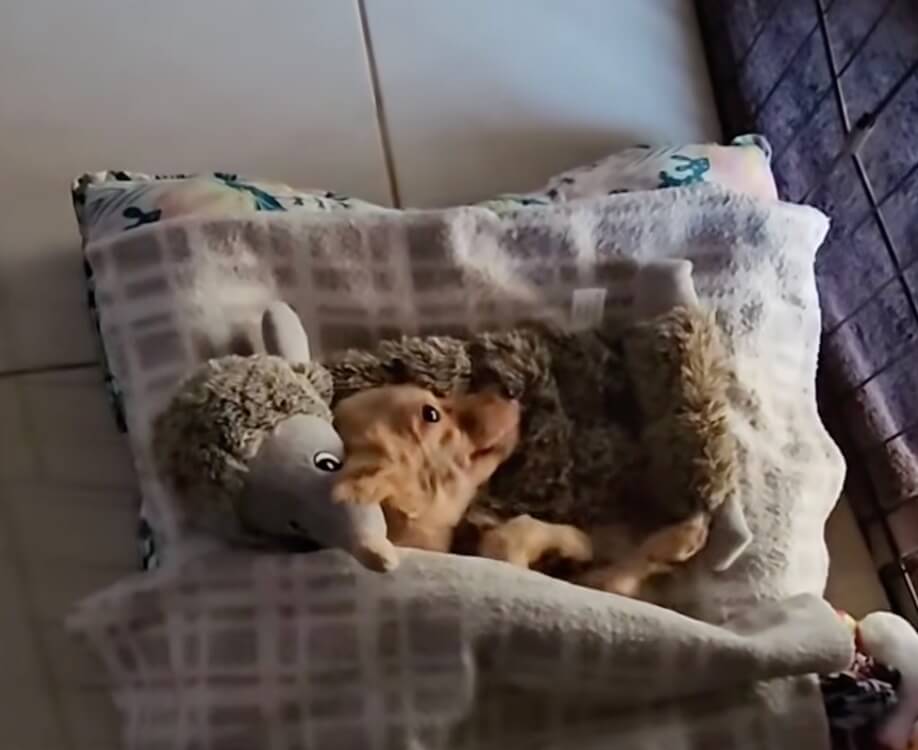
Then something started to change.
Her coughing became less frequent.
Her breathing slowly improved.
She managed to sit up by herself for short periods.
Those moments may have seemed small from the outside, but for the people caring for her, they meant everything.
For the first time in a very long while, Selena appeared to feel safe.
And as her body started recovering, something else began healing too.
Her spirit.
The frightened puppy who had arrived focused entirely on survival slowly began relaxing. She started showing interest in her surroundings. Garden visits became something she looked forward to. She began trusting the people helping her.
The rescue team realized they weren’t just watching a medical recovery.
They were watching a puppy rediscover life.
By this point, Selena was no longer simply surviving.
She was beginning to live.
Selena’s Recovery Timeline
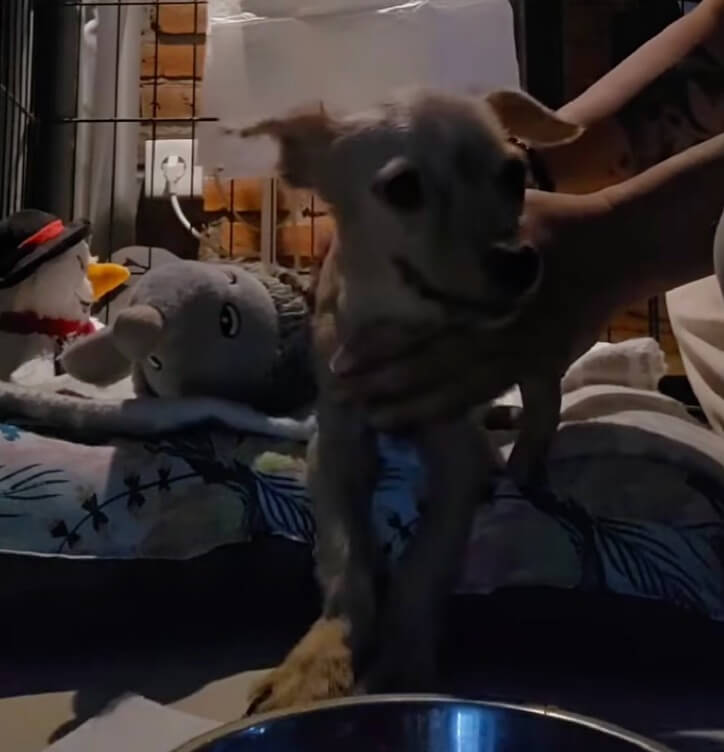
As the days passed, Selena’s progress became impossible to ignore.
Day 15
Her food portions were increased, and she started gentle physical therapy designed to help strengthen her body.
Day 20
Selena began barking when she was hungry and enjoying supervised trips into the garden.
Day 26
She started trying to move herself forward using her front legs with help from her caregivers.
For a puppy who had once struggled to do little more than lie still, the effort was remarkable.
Day 34
The team noticed a major emotional shift.
Selena looked forward to meals. She brightened whenever people approached. The fear that once seemed permanently fixed in her expression was beginning to fade.
Day 45
She stood on her own.
Not perfectly.
Not for very long.
But she stood.
As her fragile legs trembled beneath her, caregivers watched in disbelief.
Day 60
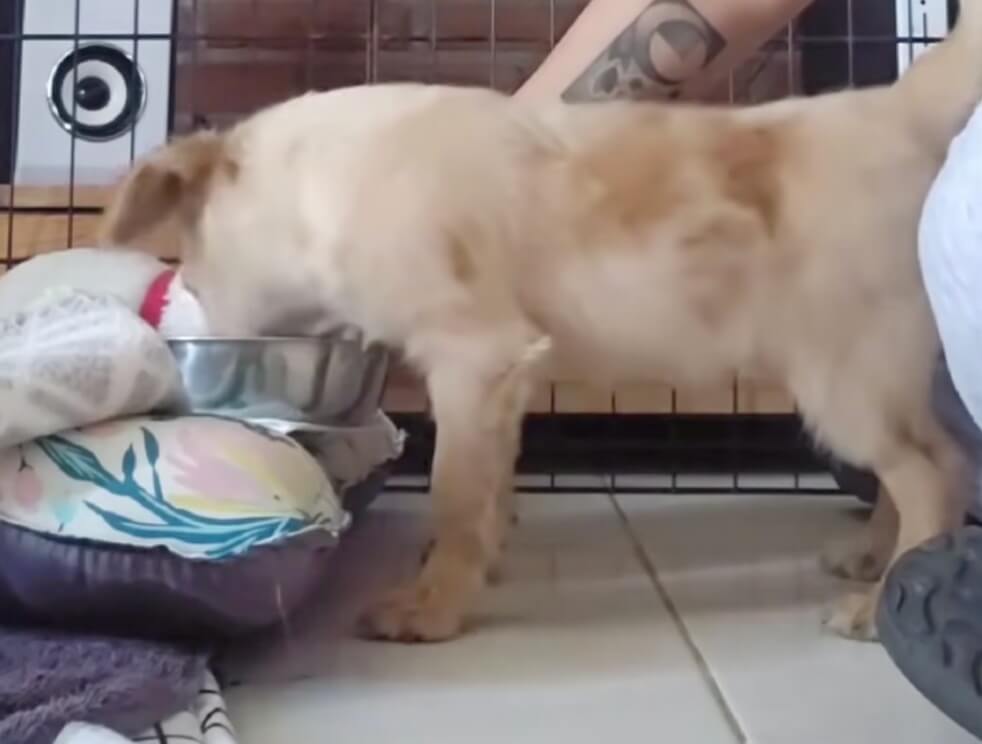
Selena took her first independent steps.
Slow.
Wobbly.
Careful.
But entirely her own.
Throughout this period, rehabilitation became an important part of her care. According to VCA Hospitals, “Veterinary rehabilitation uses targeted physical therapies” to help improve function and mobility in recovering animals.
For Selena, every therapy session became another step toward a future few people thought was possible.
Then Came the Moment Nobody Expected
After taking her first independent steps, Selena’s progress accelerated.
What had once happened inch by inch suddenly began happening much faster.
Then one morning, everything changed.
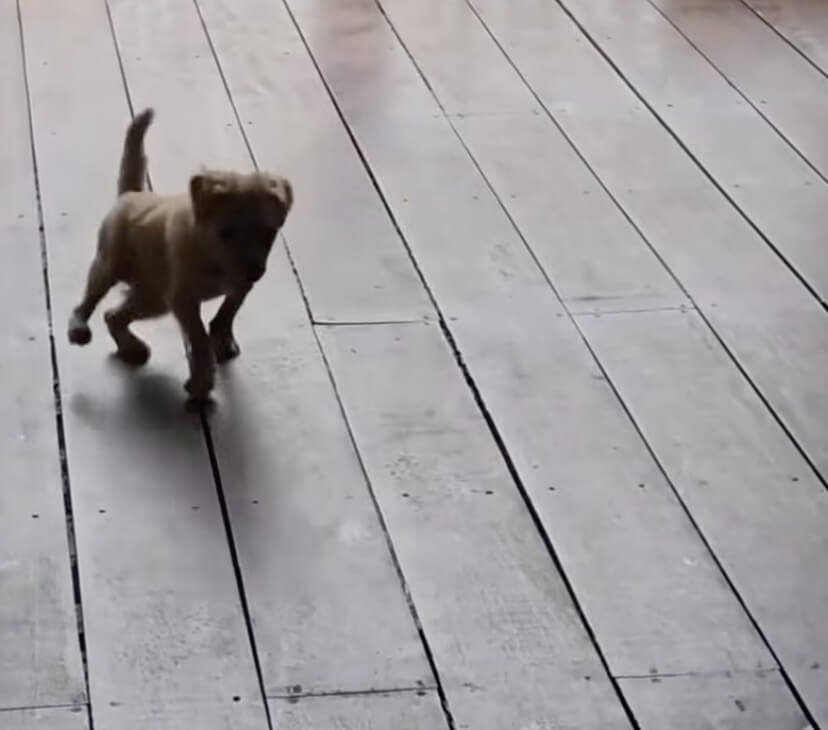
Selena ran.
Not supported.
Not carried.
Not dragged forward.
She simply ran.
Across the garden she went, her paws moving steadily beneath her as if she had always known how.
She didn’t stumble.
She didn’t stop.
She didn’t hesitate.
She didn’t look back.
For the rescue team, it was a moment they would never forget.
The puppy who once couldn’t stand was now running freely through the grass.
It wasn’t just a physical milestone.
It was proof of how far she had come.
And it was proof that the future everyone feared for her was no longer the future she was living.
A Future Filled With Hope

Selena’s journey isn’t over.
She still requires ongoing neurological care, rehabilitation, and specialized support.
But her life today looks dramatically different from the one rescuers encountered when they first picked her up.
The puppy who once struggled to move now approaches life with excitement.
The dog who seemed trapped by her diagnosis now races across the garden under her own power.
Most importantly, she is no longer facing those challenges alone.
She has people who care about her. People who continue showing up for her. People who chose to believe in her long before there was any reason to think recovery was possible.
As the rescue team reflected on her transformation, they shared a simple message that captures the heart of Selena’s story better than any medical report ever could: “Sometimes, they just need someone willing to believe in them.”
Sixty days earlier, Selena couldn’t stand on her own.
Now she was running across the grass with confidence.
For a puppy many people thought would never walk, that simple moment meant everything.
If Selena’s journey touched your heart, consider sharing her story. Every share helps shine a light on the dedicated rescuers who refuse to give up on animals when they need help most. Her updates are waiting in the comments.
Also read:
She Was Too Weak to Stand. Two Months Later, She Took Her First Walk Into a New Life
Left on the Sidewalk: How Valentino’s Rescue Restored His Strength and Dignity


I love that story. Thats a miracle. I am so glad that there others who is dedicated to healing and caring. Thank you all. May god bless all of you. May she continue to heal. ❤️❤️❤️❤️❤️❤️❤️❤️❤️❤️❤️❤️❤️❤️❤️❤️❤️❤️❤️❤️❤️