
Skiper Cried for Days on a Chain. What Happened Next Saved His Life
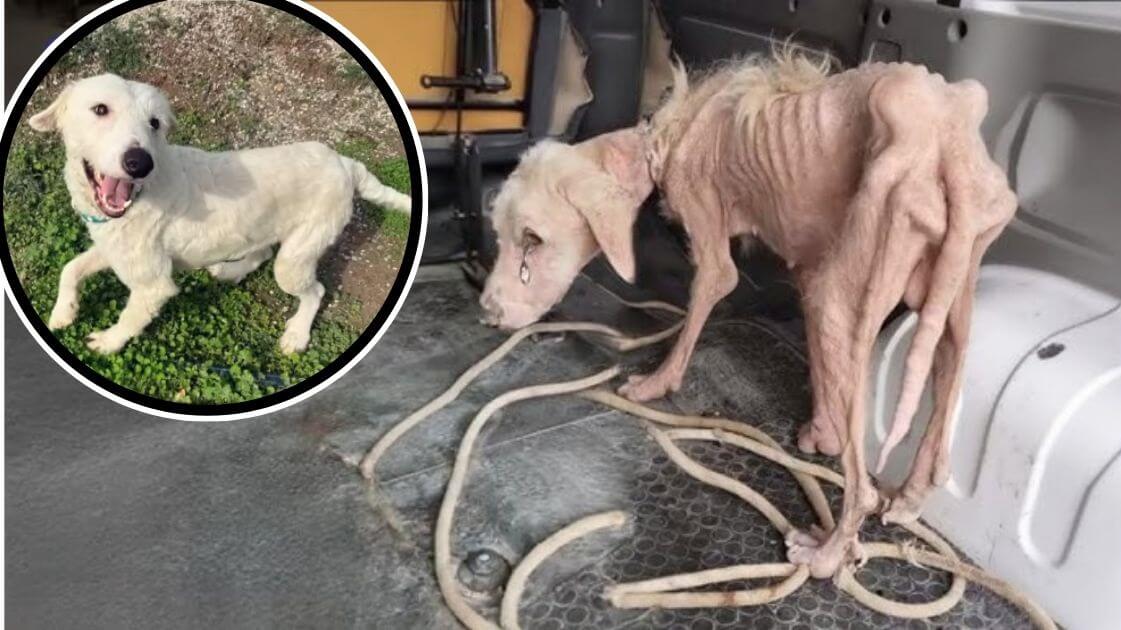
Skiper cried for days before anyone heard him.
Tied to a chain, starving, and sinking into fear, he waited in a backyard where no one came back for him. His body thinned. His hope thinned with it. Each night, he begged the dark for help — the kind of cry most people never notice or choose not to.
Across the country, stories like his play out behind fences and closed doors. National shelter data shows millions of dogs still enter the system each year after suffering neglect or abandonment, according to Shelter Animals Count.
Skiper almost became another silent number in that count — another dog hidden away and forgotten.
Until someone finally listened.
This story was first shared by the rescue team of protectorafido.
Skiper’s Life Before Rescue: “Chained, Starving, and Left to Die”
It was every dog’s dream to find a forever home. To be loved and cherished. That’s what Skiper had hoped for.
Instead, what awaited him was hell. His owners hated him and punished him every day. Their cruelty reached a climax when they chained him in the backyard — leaving him there forever.
He didn’t die.
He cried, begged for help. As if asking: “What did I do wrong? Why am I not worth coming back for?”
A Cry in the Dark: The Neighbor Who Listened
Days passed. Skiper’s fur thinned, his body weakened. He shrank physically — and emotionally — into himself. He believed no one would ever come.
Then one neighbor heard his desperate cries. Rescuers from a local dog-welfare group arrived. Skiper didn’t run to them. He backed away.
Starving, but guarded. He had learned humans hurt — even the ones who once held him as a pup.
But the rescuers didn’t give up. They offered warm food, gentle hands. For the first time in a long while, kindness without pain.
The Slow Return of Hope
Skiper ate — but cautiously, as though unsure whether he was allowed. He curled into a new bed with distrust. Day by day, the ribs became less visible. His fur grew back.
Then one day, he wagged his tail. A small wag, hesitant — but the moment that changed everything.
He was learning to trust again. To believe not all humans disappear when the leash comes off.
Psychologists call this process “learned helplessness” — when an animal repeatedly faces trauma without escape, it may shut down emotionally and stop trying even when rescue arrives. Dogs rescued from puppy mills or severe neglect often show this behavior.
But learned helplessness can be reversed. For some dogs, recovery begins the moment they feel safe. For others, healing takes weeks, months — sometimes longer.
From Chains to Comfort: Skiper’s New Beginning

Today, Skiper is almost unrecognizable. He’s spoiled — in the best way. He sleeps on a real bed. He’s surrounded by love. He has a family that sees him not as a burden, but as a blessing.
He’s no longer the dog who cried behind a fence. He’s the dog who runs across his yard, tail high, heart healed.
He survived — because someone cared. Because someone acted.
Why Dogs Get Chained and Abandoned: The Bigger Problem
Stories like Skiper’s are far from rare. A 2024 analysis found that while shelter intakes dipped slightly, the number of dogs and cats entering shelters remained high.
Many dogs are surrendered by owners who lack resources, space, or support.
Some are intentionally chained or abandoned because of neglect, ignorance, or cruelty — especially when people underestimate the emotional needs of dogs.
In a recent year, shelters documented over 800 licensed breeding-facility violations just in the U.S., many involving failure to provide food, shelter, or veterinary care.
That means Skiper isn’t an exception. He’s a rare survivor among many left to suffer.
Recognizing the Signs of Neglect and Abuse
It’s hard to imagine a healthy dog being left to starve — but neglect often doesn’t look like an obvious crime.
Look for:
- visible ribs or extreme thinness
- missing or patchy fur, skin wounds, mange
- fear of humans, cowering, backing away even when offered kindness
Veterinary professionals stress the importance of early intervention. When vets or rescue workers spot neglect, they often provide emergency care, shelter, and long-term rehabilitation.
What Happens When Rescuers Step In
When rescues respond to neglected animals, recovery goes beyond immediate medical care. At specialized facilities, rescued dogs get behavioral assessments, daily exercise, socialization, and trust-building exercises.
For severely traumatized dogs — like Skiper — this process can take months. Staff often use positive reinforcement and slow exposure to rebuild confidence. For many dogs, a hesitant wag turns into a joyful sprint across the yard.
How You Can Help: Be the Voice They’re Waiting For
If you suspect a dog is being neglected or abandoned:
- Document safely (photo, notes) — without putting yourself at risk
- Contact local animal welfare authorities or rescue groups
Speak up. One call, one forward, one share could mean the difference between life and death.
Rescue organizations rely on public awareness. When people report abuse, they give dogs a chance at the love and safety they deserve.
You can also read these rescues:
Chained for Years, Now Free: Maximus’ Emotional Recovery Story
A Puppy Covered in Tumors at Just 1.5 Years Old — His Fight to Live Stunned Rescuers
Final Reflection: A Single Act Can Save a Life
Skiper’s story shows how fragile hope can be — and how powerful a single act of kindness is.
He survived chains, starvation, fear. He lived in doubt. Then he wagged.
If you hear a cry in the dark, don’t ignore it. Be the light.
Share their stories. Stand for the voiceless. Because sometimes — one voice, one share — changes everything.


