
A Tiny Kitten Cried From the Tall Grass. Someone Stopped to Listen.
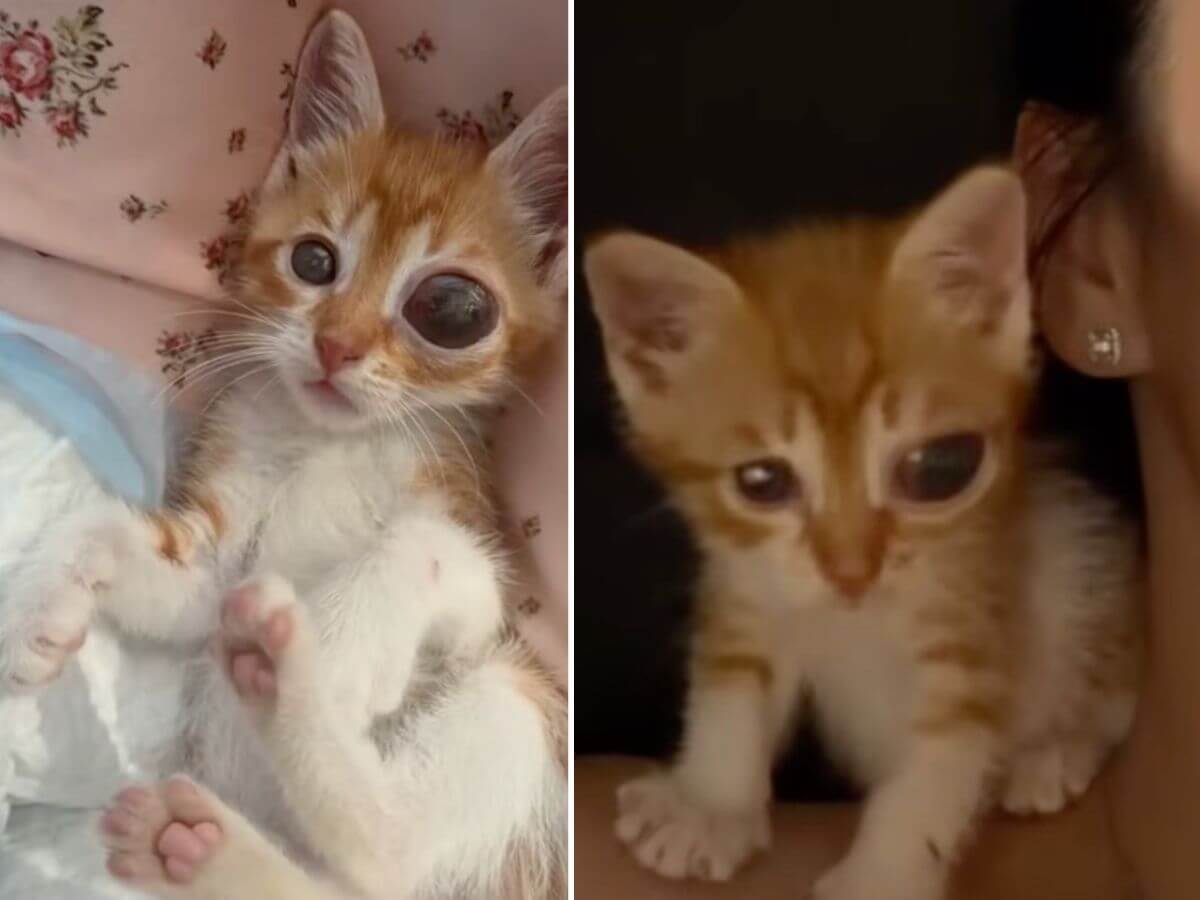
There were no houses nearby when someone heard a kitten crying. The sound was coming from the tall grass, so they stopped and searched.
The kitten they found was Steve, a month-old little thing who weighed 300 grams, or about 11 ounces.
He was hungry and congested, and one of his eyes was badly inflamed. The people who found him saw no sign of his mother.
Steve hardly had the strength to move, but he’d managed to make enough noise for someone to find him.
His rescuers picked him up and took him straight to a veterinary hospital.
Five days in intensive care
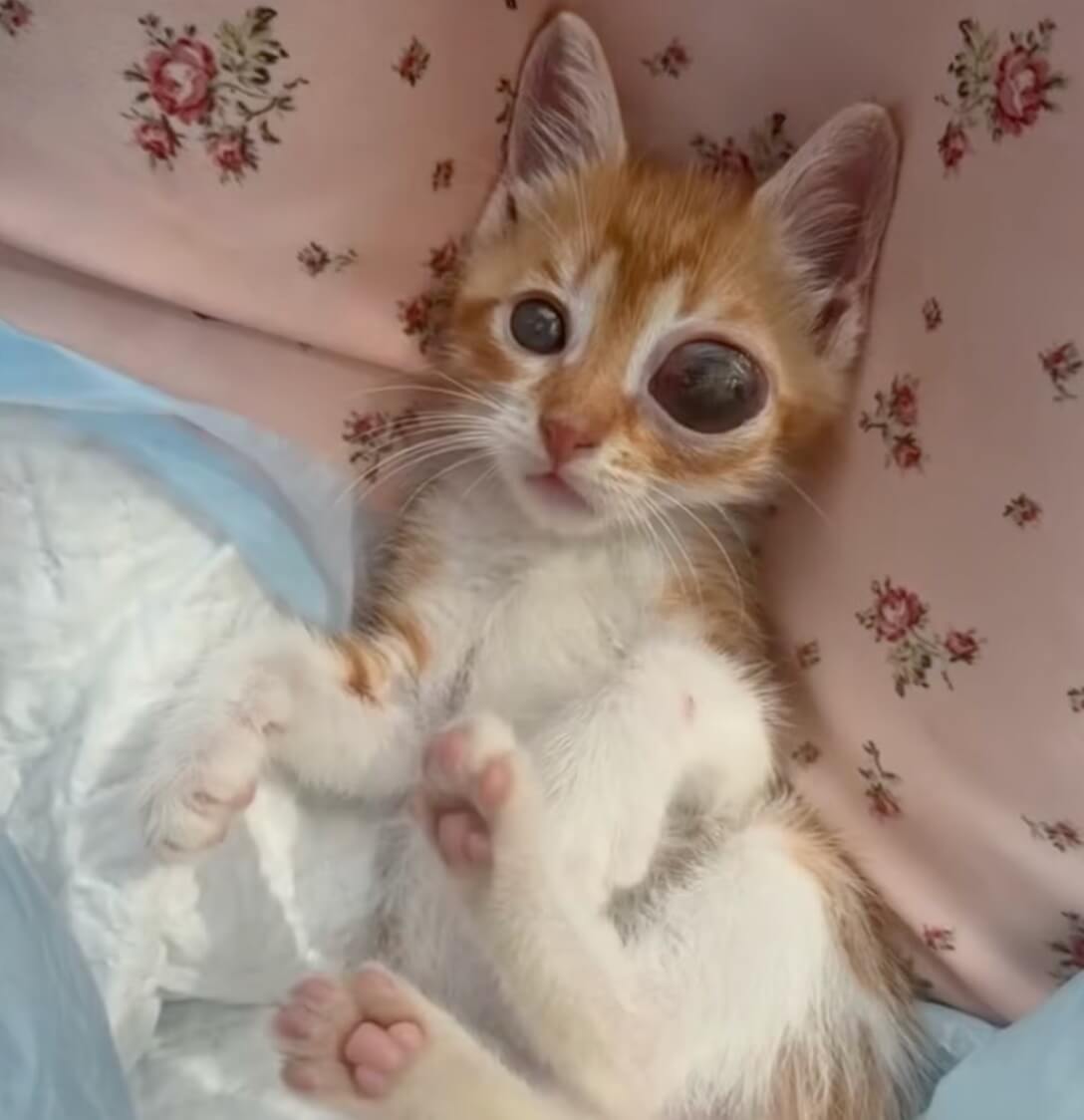
Steve’s rescue account comes from @gloriya20 and was shared on YouTube by Animals need love. In the account, the trip out of the grass led to about five days in intensive care. The people who’d heard him in the grass had been able to pick him up and get him help. At the hospital, the vets took over.
The vets were treating a viral infection and keeping a close watch on his inflamed eye. There were two things to keep track of.
They needed to get a very small, very weak kitten stable, and they needed to see what could be done about his eye. Getting him through those first few days would only answer part of the question.
The video’s narrator put the other part plainly. “Could his damaged eye be saved?” It was a question that would follow Steve beyond his first hospital stay.
A second hospital and more time
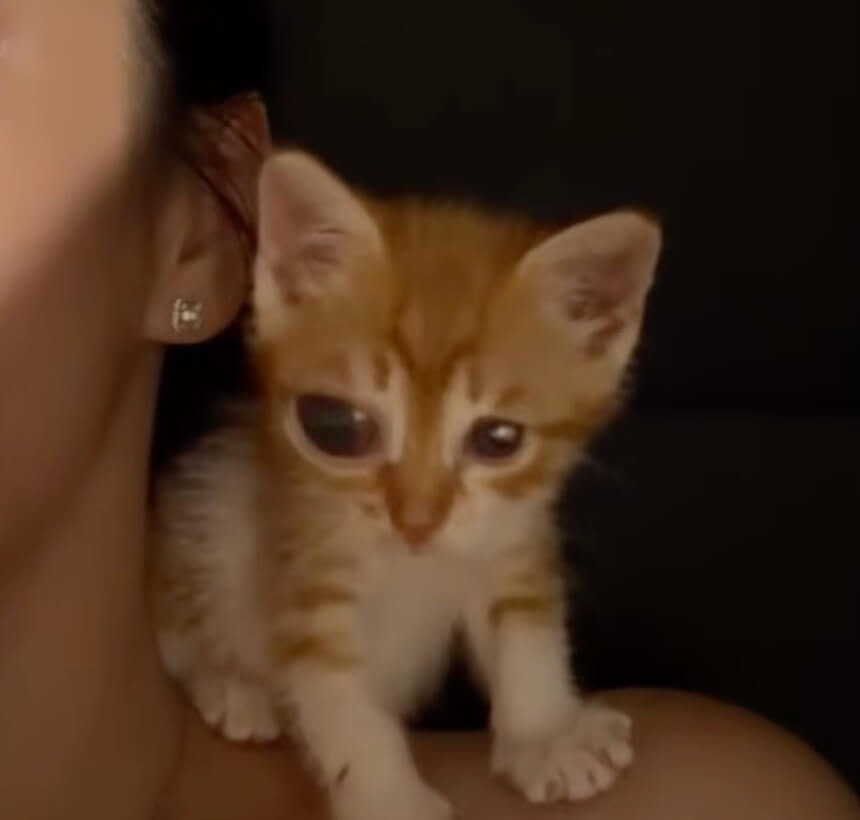
Steve’s rescuers took him to a second veterinary hospital for another opinion. The team there adjusted his treatment and gave the medication more time to bring down the inflammation and pressure.
That meant more waiting for an answer about the eye, even as Steve’s care moved forward.
The second opinion gave the team a plan they could follow while the eye was still being assessed. It also meant Steve could make progress in one part of his recovery while the other remained unsettled. When he was well enough to leave, the question about his eye went home with him.
Outside the hospital, his care changed hands for part of the day. The vets still had a role, but his rescuers would handle much of the routine at home.
He had somewhere warm to rest between visits, and the people looking after him had instructions to follow until it was time to go back.
The people who kept coming back
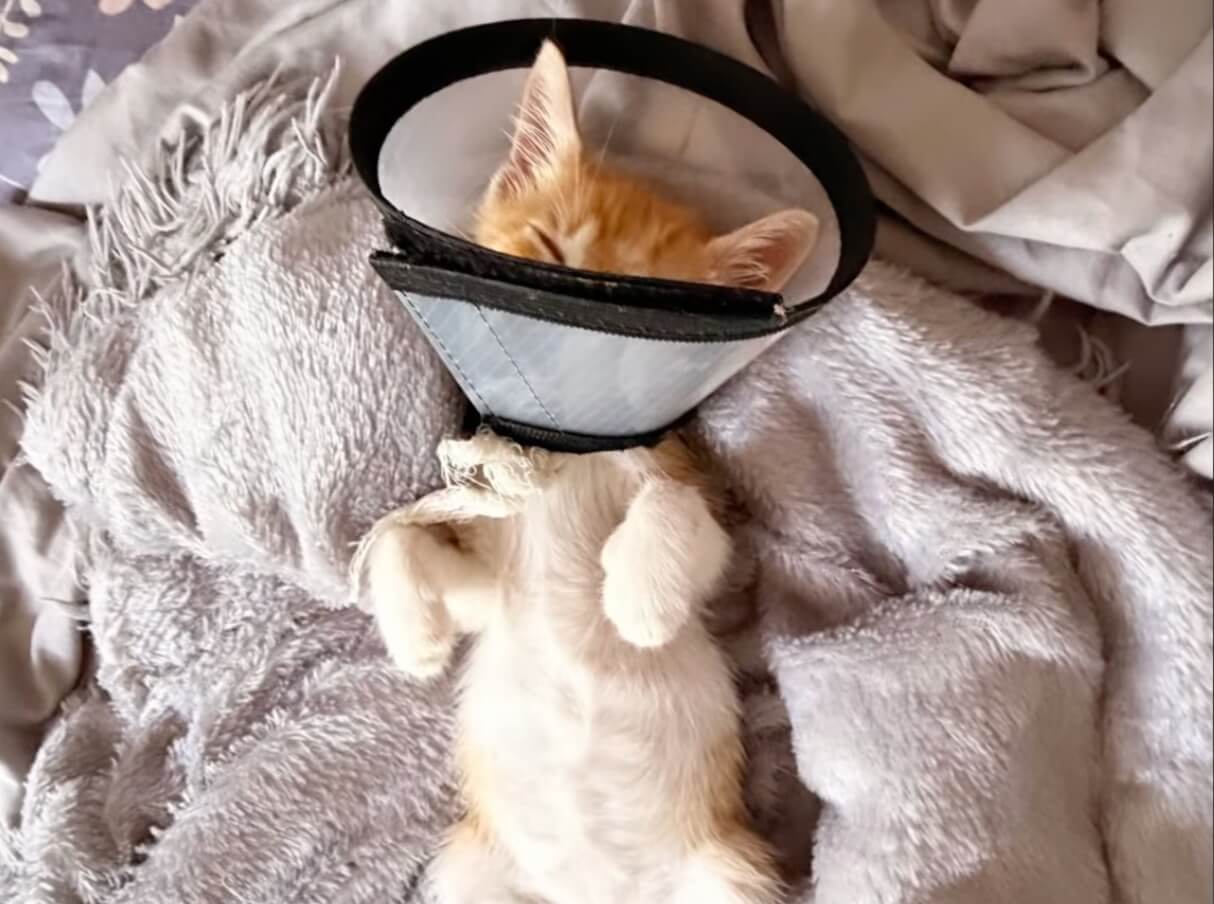
For about two weeks, Steve’s rescuers brought him back to the hospital every day for injections. Back at home, they gave him about five different eye medications each day, following the vets’ instructions. Each hospital visit was one part of the day. The rest of his care went home with him.
VCA Animal Hospitals advises, “Make sure you carefully read the drug label and understand the prescription instructions.” In Steve’s case, there were several eye medications to keep track of alongside those daily hospital trips.
The account measures this part of his recovery in days. There was the day he went in for an injection and came home to rest, then the next day when his rescuers did it again.
As the video’s narrator said, Steve “kept making it through one day then another.”
The decision about Steve’s eye
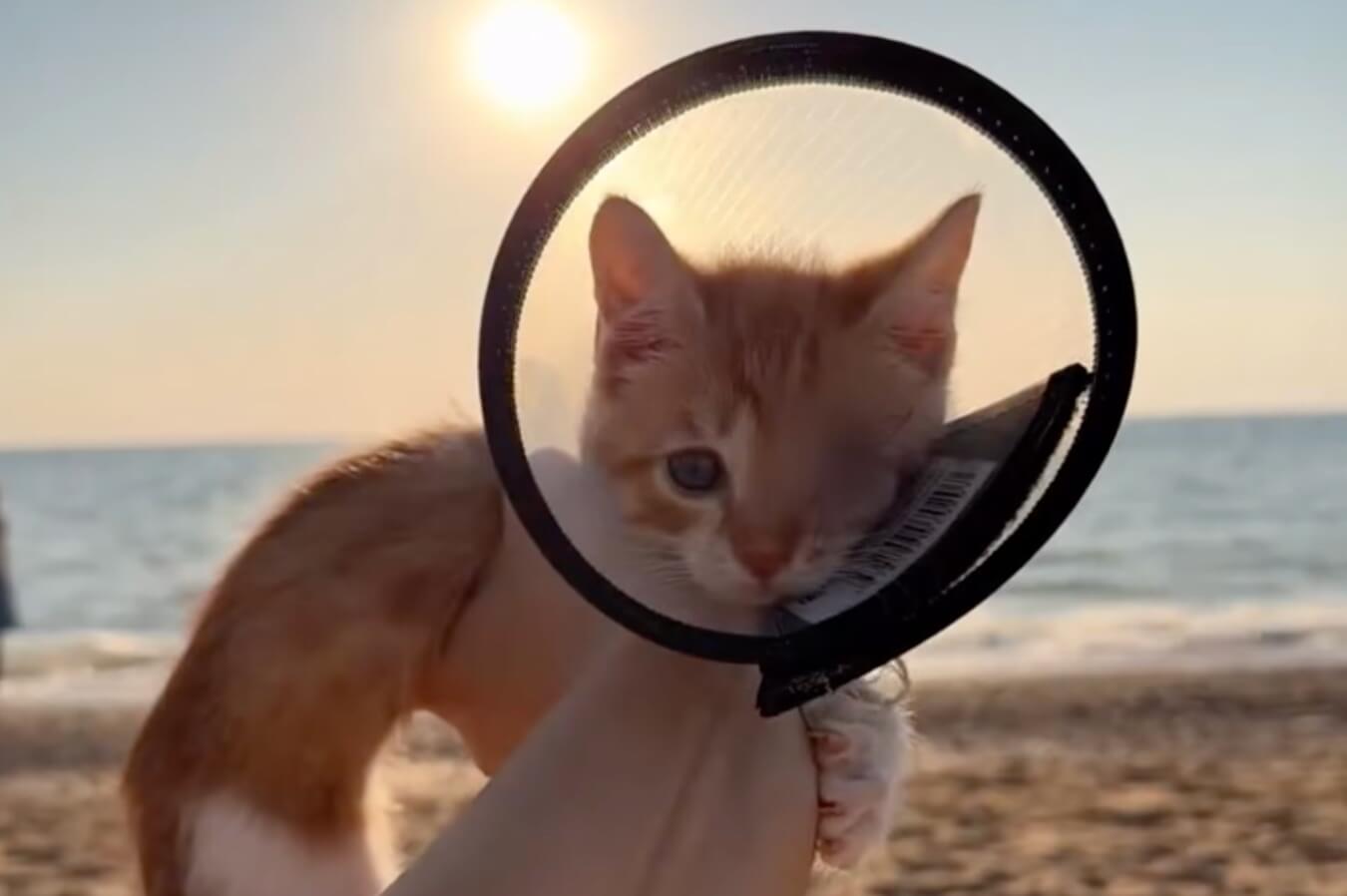
About a month into Steve’s care, the vets reached a decision. His injured eye couldn’t be saved. The answer came after two hospitals, a change in treatment and weeks of care at home. The next step was surgery to remove the eye.
The veterinary charity PDSA explains, “Removing an eye (enucleation) is usually a last resort, but is necessary in some circumstances.” By the time Steve’s vets made that call, the team had given medication time to bring down the inflammation and pressure.
Steve had the operation and grew more stable afterward. For a kitten who’d arrived hungry, congested and barely able to move, that was welcome news. He still needed care, and the people who’d taken him from the grass were there to give it.
A safer place to recover
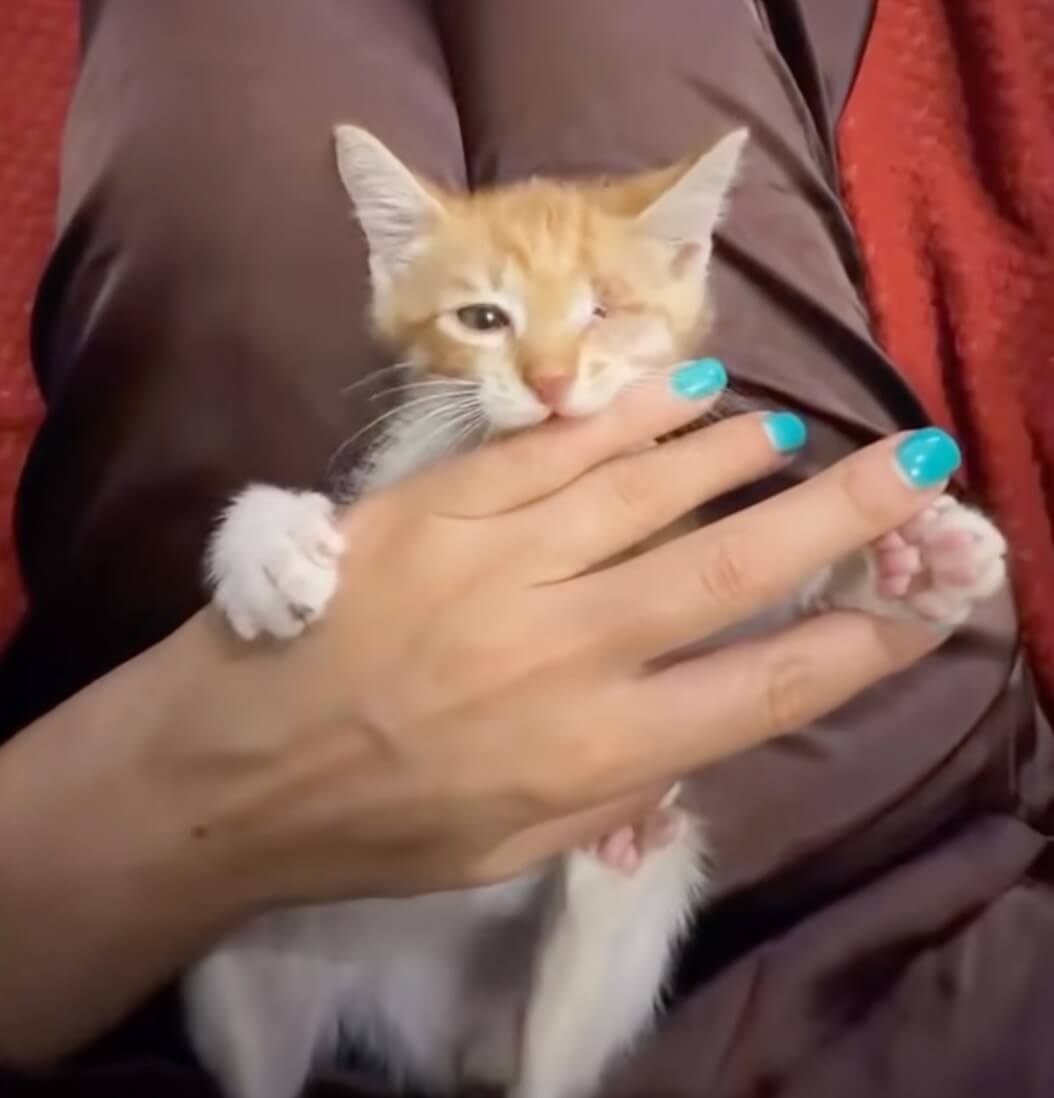
When the video ended, Steve was safe and still receiving care. The account follows him through that stretch of recovery, from the moment someone heard him to the weeks when getting him to the hospital became part of somebody’s day.
It took one person stopping to find him. After that came the people who got him to the first hospital, the vets who watched his progress and the rescuers who kept bringing him back.
The trip to the second hospital gave him another chance at treatment. The trips that followed made sure he received it.
The first time Steve needed help, all he could do was cry. By the end of the account, he had a safe place to rest and people to look after him. They’d been showing up for him for weeks.
If Steve’s story made you think of someone who always stops to help an animal, share it with them.
Also read:
Two Kittens Were Found Too Weak to Cry. Weeks Later, They Were Playing Together


